


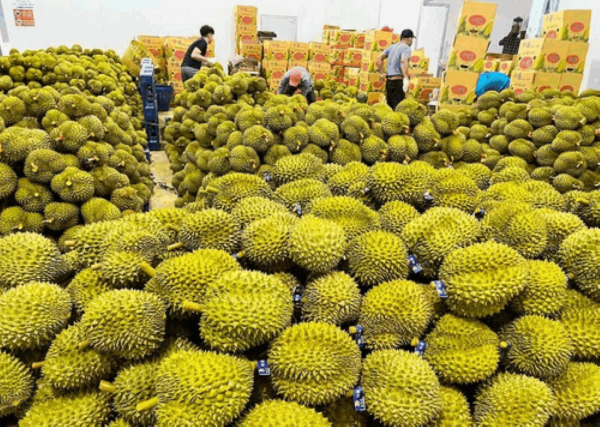
According to data from the Vietnam Fruit and Vegetable Association (VINAFRUIT), from the beginning of March 2026 to March 20 alone, fruit and vegetable export turnover reached nearly $483 million, up more than 37% compared to the previous month and 1.2% year-on-year. In the first three months of 2026, export value is estimated at nearly $1.48 billion, marking a 27% increase compared to the same period last year.
CHINA ACCOUNTS FOR MORE THAN 54%
By market, China continues to be the largest destination for Vietnam’s fruit and vegetable exports. In the first two months of the year, exports to this market exceeded $538 million, up 76% and accounting for more than 54% of total market share. Improvements in transport infrastructure, particularly the North–South expressway, have helped shorten delivery times and enhance export capacity to this market.
The United States ranked second with nearly $79.5 million in export value, representing about 8% of the market share, followed by South Korea and Japan with over $42.7 million and around $35 million, respectively. Notably, several markets posted sharp growth, including Malaysia (up 197%), Germany (183%), and the Netherlands (155%), reflecting a trend toward market diversification beyond Asia. In contrast, exports to Thailand declined, reaching only about 72% of the level recorded in the same period.
On the import side, fruit and vegetable imports in March reached nearly $196 million, up slightly by 1% from the previous month but down 2% year-on-year. In the first quarter, imports totaled $761.4 million, an increase of 25.7%. Overall, the sector maintained a trade surplus.
China and the United States were also the largest suppliers of fruit and vegetables to Vietnam, with import values exceeding $214 million (nearly 38% market share) and around $167 million (nearly 30%), respectively. Imports from markets such as India and Australia surged by more than 243% and 200%, respectively, highlighting a growing trend of supply diversification.
DURIAN BREAKS THROUGH AS A KEY DRIVER
Within the broader picture of the fruit and vegetable sector, durian continued to stand out as a key growth driver. Exports of this product to China maintained triple-digit growth from the beginning of the year.
In February 2026, durian export turnover reached nearly $29 million, up 34% year-on-year, with exports to China alone accounting for $26 million, a surge of 186%. In total, durian exports in the first two months reached $146 million, up 177% compared to the same period last year.
In addition, several emerging markets, although still small in share, recorded strong growth, including South Korea (303%), Papua New Guinea (266%), the United States (243%), Australia (68%), Canada (34%), and Japan (31%).
In 2025, fruit and vegetable exports reached approximately $8.6 billion, up nearly 20%, with durian contributing nearly $4 billion, accounting for 40–45% of the sector’s total export value. Entering 2026, durian continues to be identified as a strategic commodity for Vietnam’s agriculture.
Despite positive results, the durian sector is facing a range of challenges, particularly increasingly stringent technical barriers from importing markets. Requirements related to food safety, traceability, pesticide residues, and heavy metals are becoming critical factors.
In reality, many durian shipments have encountered risks due to non-compliance with these standards, reflecting systemic limitations across the production chain. This underscores the urgent need to shift from rapid growth to sustainable development.
One notable concern is the risk of heavy metal contamination, particularly cadmium. This substance can accumulate in crops if soil, water, or fertilizers are polluted, directly affecting product quality and export potential.
Experts suggest that control measures must begin at the source, including zoning of cultivation areas, regular monitoring of soil, water, and crops, as well as the development of risk maps for more effective management.
In addition, pests remain a major factor affecting product quality and reputation. The adoption of integrated pest management (IPM), increased use of biological products, and reduced reliance on chemicals not only help meet market standards but also contribute to environmental protection and farmers’ health.
In the current context, Vietnam’s fruit and vegetable sector in general, and the durian industry in particular, need to shift their development mindset: from expanding acreage to controlling quality; from short-term growth to long-term, sustainable, and responsible development. Only by ensuring quality standards, enhancing value chain transparency, and strengthening management of cultivation areas can the durian sector sustain its growth momentum and solidify its position in the global market.
Source: vneconomy.vn

