


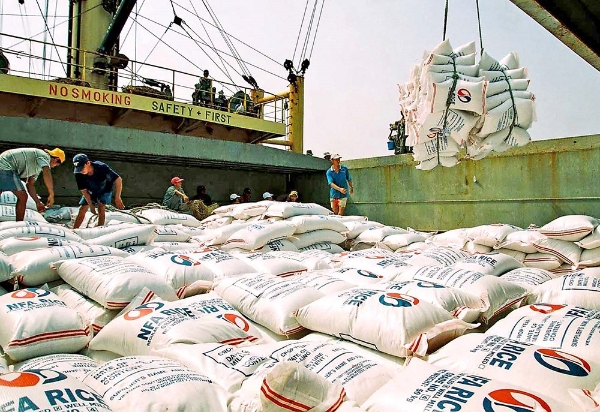
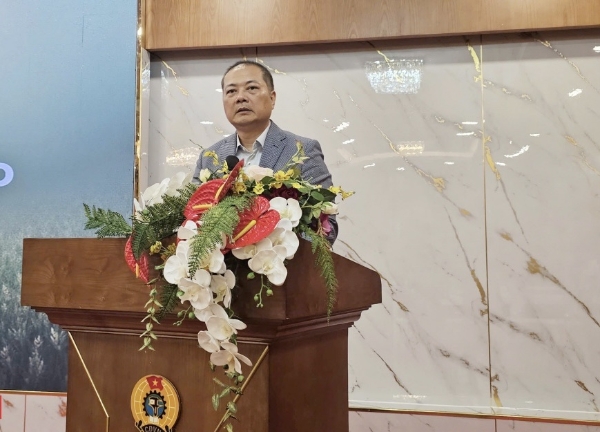
On December 10, 2025, in Ho Chi Minh City, the Ministry of Industry and Trade held the “Rice Export Business Conference” to review Vietnam’s rice export performance in 2025 and outline solutions to boost exports in the coming period.
Facing a series of challenges
According to preliminary statistics from the Customs Authority, in the first 11 months of 2025, Vietnam exported more than 7.53 million tons of rice worth over USD 3.85 billion. The average export price reached USD 511.09 per ton, down 10.9% in volume and 27.4% in value compared to the same period in 2024 — the highest rice export year on record.
In export markets, sharp declines were seen in Indonesia (down nearly 96.38%) and Malaysia (down 32.5%). However, rising shipments to Ghana (up 52.64%), China (up 165.14%), Bangladesh (up 238.48 times), and Senegal (up around 73 times) helped offset declines in Indonesia, Cuba, Malaysia, and others.
As of October 2025, Vietnam’s rice exports consisted mainly of high-quality white rice and fragrant rice varieties, accounting for 69% of total export volume.
Speaking at the conference, Nguyen Anh Son, Director of the Import-Export Department under the Ministry of Industry and Trade, said rice exports had recently faced numerous difficulties due to escalating security and political instability in several countries and regions. Although inflation has eased, it remains high.
In addition, global trade and investment are recovering slowly, while many major economies continue to adopt tight monetary policies, creating significant pressure on financial markets, currencies, and exchange rates in developing countries.
Consumer demand and economic activity remain subdued. Protectionist policies have re-emerged in many countries in various forms. Developed economies are increasingly focused on consumer safety, sustainability, and climate change mitigation, leading to new standards and regulations applied to imported products.
Entering 2026, representatives of the Department of Crop Production and Plant Protection (Ministry of Agriculture and Environment) forecast total output at around 43 million tons, down about 0.2 million tons compared to the same period due to reduced cultivation areas across crop seasons.
According to Tran Quoc Toan, Deputy Director of the Import-Export Department (Ministry of Industry and Trade), Vietnam’s rice exports in 2026 will be influenced by several factors. The Philippines is expected to resume imports from January 2026, and although there may be changes to rice import tariffs and related regulations, this development is considered positive for Vietnam’s rice export prospects.
In addition, traditional markets such as China, Bangladesh, and African countries are expected to increase imports. Market signals from bilateral rice trade agreements and the improvement in the quality of Vietnam’s exported rice are also enhancing its competitiveness globally.
Standardizing production zones, leveraging FTA markets
In the context of current production, consumption, and exports, Le Thanh Tung, Vice Chairman and General Secretary of the Vietnam Rice Industry Association, emphasized that rice should be treated as a special commodity requiring close monitoring to ensure both domestic supply and food security while meeting export demand effectively. He urged stronger linkages to develop stable raw material zones meeting food safety, traceability, and quality standards, laying the foundation for branding. Production, he stressed, must align with the standards and volume requirements of importing countries.
Based on this, Tung proposed that the Vietnam Food Association and its member enterprises coordinate with the Vietnam Rice Industry Association to pilot raw material zones meeting the criteria of the one-million-hectare program. Enterprises should actively participate in building raw material regions under the Scheme on "Sustainable Development of One Million Hectares of High-Quality, Low-Emission Rice Linked to Green Growth in the Mekong Delta by 2030."
Representatives of the Department of Crop Production and Plant Protection also recommended that localities focus on restoring production after natural disasters and concentrate on the 2025–2026 Winter-Spring crop, ensuring proper planting area, variety structure, and schedule. They also urged rapid implementation of the sustainable one-million-hectare rice scheme, as well as efforts to promote consumption and export of this rice segment.
Regarding free trade agreements (FTAs), Ngo Chung Khanh, Deputy Director of the Multilateral Trade Policy Department (Ministry of Industry and Trade), pointed out the limitations of Vietnamese rice exporters in utilizing FTA preferences. These include insufficient focus on high-value markets and the lack of development of distinct rice brands within FTA markets.
To address this, Khanh proposed solutions such as developing strategic plans to leverage FTAs effectively; improving coordination between agencies and enterprises; building strategies to promote Vietnamese rice branding; and enhancing connectivity across the industry with coordination from state bodies and associations.
The representative of Vietnam’s Trade Office in the Philippines urged rice exporters to exercise caution when negotiating contracts with Filipino partners, as the Philippines is still temporarily suspending imports—even though multiple sources suggest imports may resume in January 2026.
Additionally, trade offices recommended that exporters pay close attention to ensuring rice quality, quarantine procedures, packaging, and labeling, while conducting thorough checks on importers and their payment practices to secure efficient and profitable export operations.
Source: vneconomy.vn

