


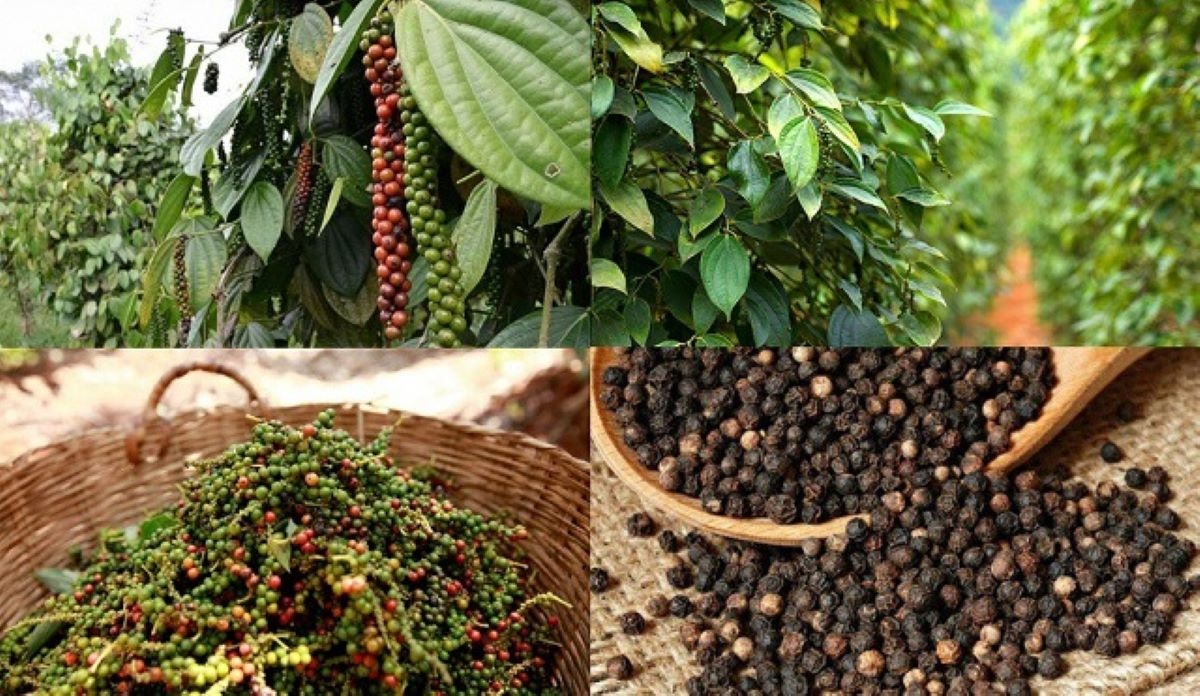
According to data from the General Department of Customs, in the first 15 days of March 2026, Vietnam exported 12,613 tonnes of pepper, generating 81 million USD in revenue. Compared to the same period last year, this represents an increase of 46.7% in volume and 35.4% in value.
DRIVERS FROM THE GLOBAL MARKET
From the beginning of the year to March 15, total export volume reached 48,192 tonnes, earning 312.23 million USD, up 34.6% and 28%, respectively. Although domestic pepper prices have shown a slight decline compared to earlier levels, they remain high at around 136,000 VND per kilogram (as of March 23), allowing farmers to maintain positive profit margins.
In the export product structure, black pepper continues to dominate, with export volume five times higher than white pepper. This indicates that black pepper remains the key product thanks to its production advantage and competitive pricing. However, the rising share of white pepper and deeply processed products also reflects a gradual shift toward higher-value segments.
In the first two months of 2026, the United States and China remained Vietnam’s two largest export markets, accounting for 29.9% and 12.8% of total export volume, respectively. While demand in the US remains stable, China is showing signs of increasing imports again after a period of slowdown.
In Thailand, the country is mainly importing pepper from Vietnam. The reason lies in rapidly rising demand for spices in the food and tourism industries, while domestic production is limited and costly. In addition, the trend of increasing stockpiles amid tightening global supply has prompted the country to boost imports.
From a business perspective, leading exporters continue to play a key role in driving the market. Olam Vietnam ranked first with an export volume of 1,302 tonnes, followed by Phuc Sinh (1,226 tonnes) and Simexco Dak Lak (758 tonnes).
The prominence of large enterprises lies not only in export scale but also in deep processing capabilities, stable international customer networks, and the ability to seize market opportunities. These companies are at the forefront of restructuring the pepper industry toward modernization and sustainability.
Vietnam’s pepper growth momentum is taking place amid supportive factors in the global market. In 2026, global pepper supply is forecast to decline by 15–20% due to falling inventories in major producing countries, while consumption demand is clearly recovering, particularly from the processed food sector.
TOWARD BECOMING A GLOBAL PEPPER PROCESSING HUB
According to Associate Professor Dr. Nguyen Dinh Tho (Institute of Strategy and Policy on Agriculture and Environment), the 2024–2025 period marked an important turning point as Vietnam’s pepper industry shifted from volume-based growth to value-based growth.
In 2025, Vietnam exported more than 246,000 tonnes of pepper, down slightly by 1.5% compared to the previous year. However, thanks to a sharp increase in the average export price to nearly 6,750 USD per tonne (up 28.3%), total export turnover still rose by more than 26% to approximately 1.66 billion USD. This indicates that the global pepper market has entered a new cycle after a prolonged period of oversupply.
Nguyen Dinh Tho noted that in a favorable price environment, Vietnamese exporters are actively restructuring their product portfolios, focusing on white pepper, organic pepper, and deeply processed products for high-end retail chains. Modern technologies such as steam cleaning, sterilization, fine grinding, and essential oil extraction are significantly enhancing product value. At the same time, standardized storage systems meeting European standards, traceability of growing areas, and quality control systems are being heavily invested in.
Alongside opportunities, the pepper industry is also facing increasingly stringent requirements from international markets. Major importers in the EU, the US, and Japan are tightening standards on chemical residues, labor practices, and carbon emissions across supply chains.
Traceability and sustainable agriculture certification are no longer optional but have become mandatory conditions for accessing high-end markets. This creates pressure but also drives comprehensive restructuring of the industry.
Countries with advantages in processing technology, logistics, and quality control, including Vietnam, will hold a clear edge in this new competitive landscape.
“From a macro perspective, Vietnam’s pepper value chain is shifting from a traditional agricultural model to an industrial processing ecosystem linked to global trade,” Nguyen Dinh Tho said, while also noting that although the outlook for 2026 is positive, the industry still needs to closely monitor factors such as global price fluctuations, supply from major producing countries, and trade policies in importing markets.
Source: vneconomy.vn

