


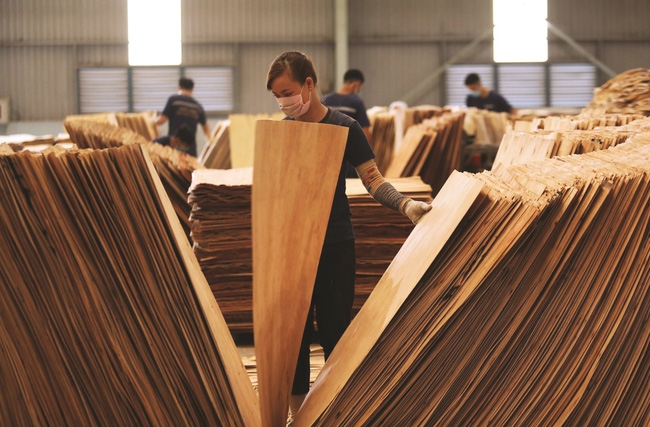
The increase in tariffs on certain finished wood products, including upholstered chairs, kitchen cabinets, and bathroom cabinets, has been postponed from January 1, 2026, to January 1, 2027.
Under the current regulations set out in Proclamation 10976 issued in September 2025, wood products imported into the United States are subject to a 10% tariff on raw timber and a 25% tariff on deeply processed products, with a planned increase to 30% and 50%, respectively, from early 2026. The adjustment to the implementation timeline means that the existing tariff rates will remain in effect for an additional year.
According to the Domestic Market Department of the Ministry of Industry and Trade, this move should not be viewed as a suspension of tariffs, but rather as a postponement of the tariff increase. Imported wood products will continue to be subject to Section 232 tariffs at current rates. However, delaying the higher tariffs has practical significance in avoiding sudden disruptions to trade and providing stakeholders with more time to adapt to the new tariff policy.
The United States stated that the decision to delay the tariff increase was made to create room for ongoing trade negotiations, while also serving the objectives of safeguarding economic security and stabilizing supply chains. This approach indicates that tariffs continue to be used as a regulatory and negotiating tool, rather than solely as a protectionist measure.
In this context, maintaining the current tariff rates throughout 2026 gives exporting companies additional time to stabilize orders, balance costs, and adjust market strategies.
For Vietnam, although the wood industry continues to face impacts from trade defense measures and increasingly stringent requirements on origin, environmental standards, and traceability, exports of wooden furniture to the United States in 2025 have maintained a positive trend. As a result, the postponement of the tariff increase helps ease short-term cost pressures, particularly for deeply processed products.
The agency also noted that the postponement of tariff increases under Section 232 is unrelated to and independent of any final rulings by the U.S. Supreme Court regarding reciprocal tariff orders.
From a legal perspective, Section 232 tariffs are imposed on national security grounds and fall under the authority of the executive branch, separate from reciprocal tariffs implemented under the International Emergency Economic Powers Act (IEEPA). Therefore, regardless of any judicial adjustments related to reciprocal tariffs, Section 232 tariffs remain independently effective.
In the medium term, U.S. tariff policy toward imported goods, including wood products, continues to carry significant adjustment risks. The United States is expanding investigations and the application of Section 232 to other strategic products, while also potentially using tariffs as a tool to support trade negotiations and balance economic and political interests in 2026.
According to the Domestic Market Department, Vietnam’s wood industry in the coming period may be considered temporarily stable but not entirely secure. Businesses are advised to closely monitor policy developments, proactively engage with import partners, and prepare contingency plans in case tariffs are reinstated according to the announced schedule.
Making effective use of the tariff postponement period to strengthen compliance capacity, diversify export markets, and enhance value added will be crucial in mitigating risks and maintaining export stability in the time ahead.
Source: vneconomy.vn

