


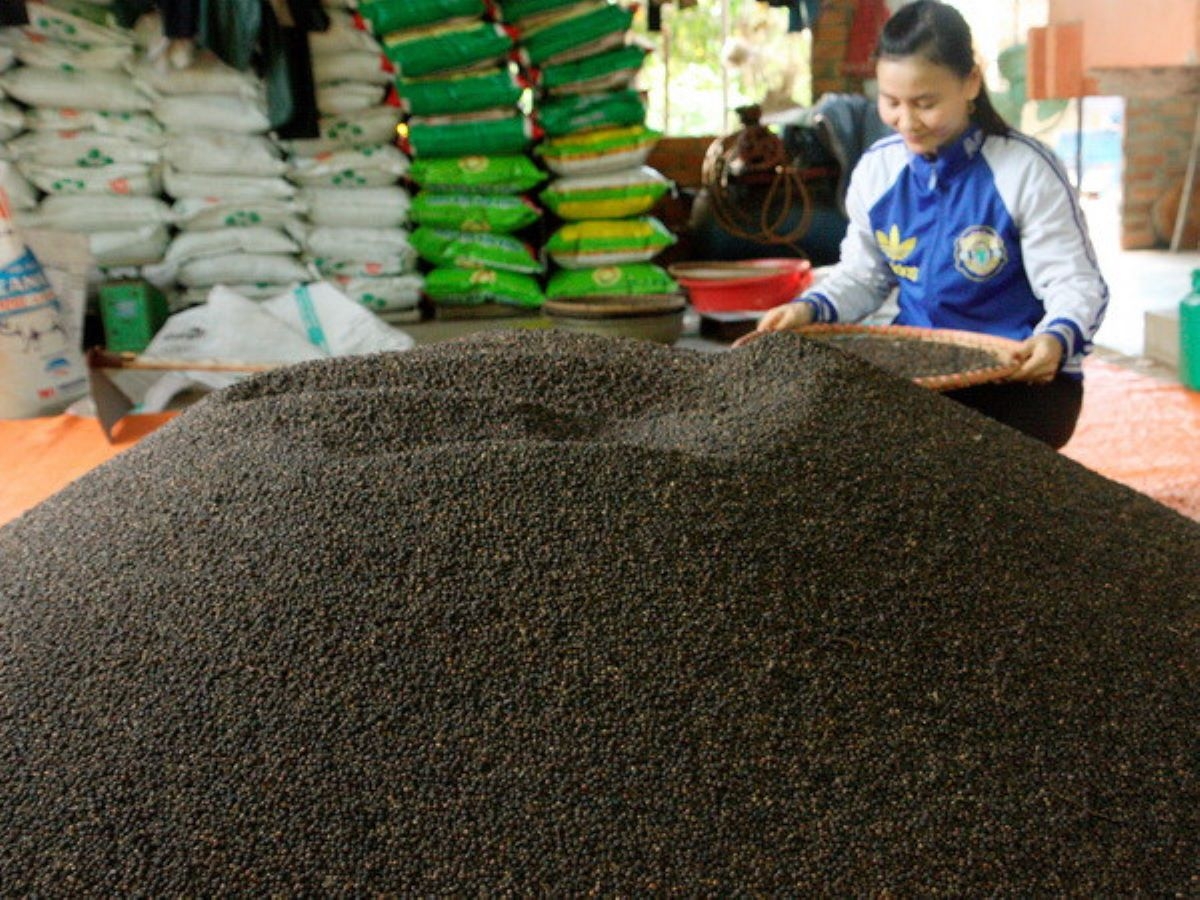
According to the Vietnam Pepper and Spice Association (VPSA), total export turnover of pepper and spices in 2025 reached USD 2.124 billion, up 20.1% year on year. Pepper alone accounted for more than 78% of the industry’s total export value.
Beyond pepper, a range of other spice products also made positive contributions, including cinnamon with about USD 300 million; ginger and turmeric at USD 61 million; star anise at nearly USD 59 million; cardamom and nutmeg at USD 33 million; and chili at around USD 10 million. This highlights the growing diversification of Vietnam’s spice export structure, reducing its heavy reliance on a single commodity.
HIGH PEPPER PRICES DRIVE RECORD EXPORT VALUE
According to data from the General Department of Customs, Vietnam exported more than 246,000 tonnes of pepper of all kinds in 2025, down 1.5% from the previous year. However, thanks to a sharp rise in the average export price to nearly USD 6,750 per tonne, up 28.3%, export value still surged by more than 26% to approximately USD 1.66 billion.
The United States remained the largest market for Vietnamese pepper, but 2025 saw a notable decline. Exports to the US fell to around 55,000 tonnes, down nearly 24% year on year, due to the impact of tax policies and a trend among US importers to prioritise the consumption of existing inventories to limit risks.
In this context, other markets such as the UAE, China, India and Germany have been playing an increasingly important role in spreading risks and maintaining stable outlets for Vietnam’s pepper industry.
Mr. Le Viet Anh, Secretary General of the Vietnam Pepper and Spice Association, noted that current export trends clearly reflect a strategic shift in the pepper sector. Instead of pursuing expansion in planted area and output, the industry is focusing on improving quality, deep processing and brand building, thereby increasing value per unit of product.
Not only in export markets, domestic pepper prices have also remained high. By the end of 2025, prices ranged from VND 150,000 to 152,000 per kilogram, helping pepper farmers significantly improve incomes after many difficult years, while creating financial room for enterprises to reinvest in raw material areas and processing technologies.
According to VPSA, Vietnam’s pepper output in 2025 was estimated at around 195,000 tonnes, accounting for 36.3% of global supply and maintaining its position as the world’s largest producer. Export volumes reached approximately 246,000 tonnes, equivalent to 57.5% of total global pepper exports, far exceeding those of other major producers such as Brazil, Indonesia and India.
With this leading role, Vietnam is not only the largest supplier but also contributes to shaping a new price benchmark for the global pepper market at a time when worldwide supply is becoming increasingly tight.
DEEP PROCESSING FOR SUSTAINABLE DEVELOPMENT
However, VPSA noted that the outlook for pepper supply in the coming years is not entirely favourable. Entering the 2025–2026 crop year, output is forecast to decline slightly due to the impacts of climate change, prolonged rainfall, increasing pests and diseases, and extreme weather. Meanwhile, pepper-growing areas are unlikely to expand rapidly due to high investment costs and farmers’ cautious mindset following a prolonged period of low prices.
Tight domestic supply, coupled with low global pepper inventories, is seen as a factor supporting prices in the short and medium term, but it also creates an urgent need to improve production efficiency and use raw materials more sustainably.
At the same time, major markets such as the EU, the US and Japan are imposing increasingly stringent requirements on traceability, chemical residues, and environmental, social and governance (ESG) standards, as well as sustainability. Enterprises that fail to meet these criteria will struggle to maintain their position in international markets.
In practice, companies that have made systematic investments in standard-compliant raw material zones and modern processing plants are enjoying clear advantages in trade negotiations, while also expanding into high-value niche segments and markets.
High prices and strong export growth present major opportunities for Vietnam’s pepper industry, but they also pose significant challenges related to supply, quality, climate change and processing capacity. In this context, accelerating deep processing, building sustainable raw material zones and diversifying markets are no longer strategic options, but mandatory requirements.
If this “golden” period is effectively leveraged to restructure towards sustainability and higher value, Vietnamese pepper will not only maintain its status as a global powerhouse but could also enter a new growth cycle that is more stable, more efficient and less dependent on fluctuations in global output and prices.
Source: vneconomy.vn

