


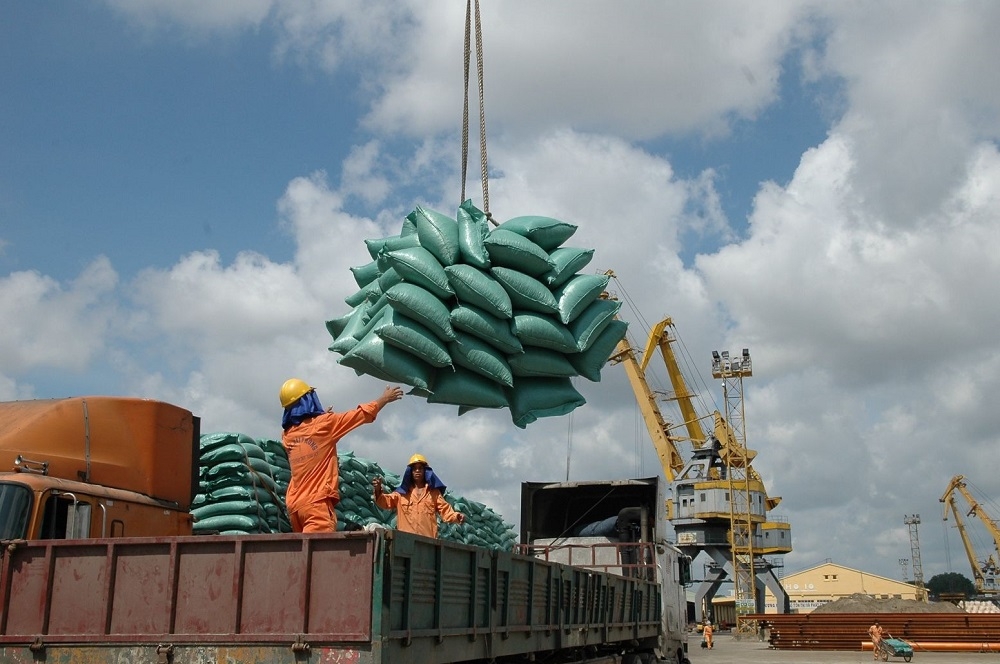
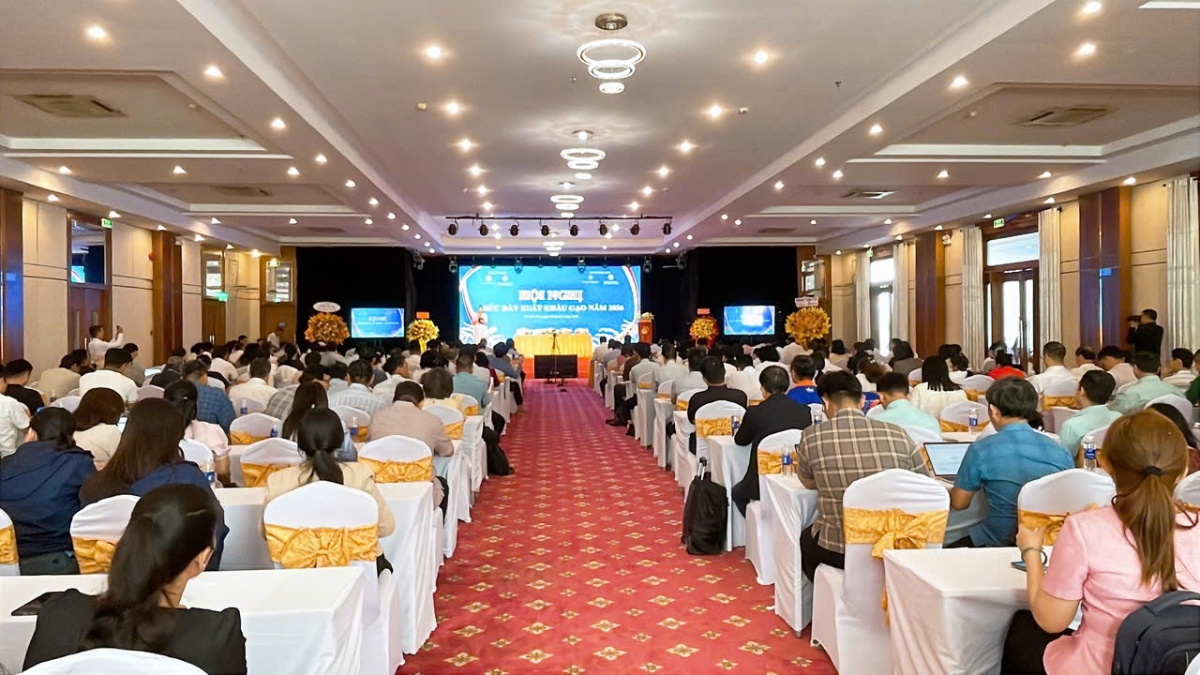
On March 24, 2026, in Can Tho City, the Ministry of Industry and Trade, in coordination with the Can Tho City People’s Committee and relevant agencies, organized the “2026 Conference on Promoting Rice Exports.”
Strong demand but a fragmented market
According to the Ministry of Industry and Trade, in the early months of 2026, Vietnam’s rice exports continued to maintain growth in volume, contributing significantly to the consumption of commercial paddy. The export structure has shifted positively, with an increasing share of high-quality rice. Markets have expanded, with gradual penetration into more demanding destinations.
However, rice exports are facing numerous challenges. Ongoing conflicts in the Middle East have driven up costs, while Vietnam’s rice exports are under pressure from intensifying competition among exporting countries and the rise of technical barriers imposed by importing markets.
As of March 15, 2026, Vietnam’s rice exports reached approximately 1.74 million tons, with a turnover of about USD 826.2 million. The average export price stood at USD 477.6 per ton. Compared to the same period in 2025, export volume increased by 2.3%, but value declined by 8.7%, while the average export price fell by 10.7%. The Philippines remained Vietnam’s largest rice import market, followed by China and Ghana.
In 2026, the country’s total rice cultivation area is estimated at over 7.09 million hectares, with output projected at 43.55 million tons. Of this, approximately 15.46 million tons of paddy—equivalent to 7.73 million tons of rice—are expected to be available for export.
Nguyen Anh Son, Director General of the Agency of Foreign Trade under the Ministry of Industry and Trade, stated that Vietnam’s rice exports are facing multiple challenges. In particular, geopolitical conflicts and instability in certain regions, especially the Middle East, have disrupted supply chains and increased logistics costs. Global rice supply remains abundant, while competition from major exporters such as India, Thailand, and Pakistan is intensifying. Export prices are trending downward, affecting business efficiency.
In addition, input costs for production and transportation remain high, while increasingly stringent import regulations (including SPS measures, quality standards, and traceability requirements) are creating further barriers for businesses.
In addition, Vietnam’s rice exports remain heavily dependent on several traditional markets, posing potential risks when these markets adjust their policies or import demand.
According to assessments at the conference, global rice demand is expected to remain high in the coming period. However, market segmentation is becoming increasingly evident, depending on each country’s import policies, food reserve strategies, and economic conditions.
Highlighting limitations among Vietnam’s rice exporters, Ngo Chung Khanh, Deputy Director General of the Multilateral Trade Policy Department under the Ministry of Industry and Trade, noted that exporters have yet to fully leverage incentives from free trade agreements (FTAs), have not sufficiently focused on high-value markets, and have paid limited attention to building rice brands.
Timely support to remove bottlenecks
To promote rice exports in the coming period and support farmers in selling their produce, conference participants recommended that the Ministry of Industry and Trade and other central agencies strengthen flexible export management, aligned with domestic supply cycles and international market signals.
At the same time, there is a need to promptly address difficulties faced by farmers, businesses, and localities—particularly through reducing logistics costs, improving access to credit, implementing temporary stockpiling when prices are low, and expanding as well as diversifying export markets.
Representatives from Vinh Long Province, the Vietnam Rice Industry Association, and the Vietnam Food Association proposed that relevant ministries study and submit to the Prime Minister plans for organizing temporary stockpiling, along with appropriate credit mechanisms to enable enterprises to purchase and store paddy and rice effectively on behalf of farmers.
Vuong Quoc Nam, Vice Chairman of the Can Tho City People’s Committee, called on the Ministry of Industry and Trade to intensify trade promotion activities and improve the legal framework to ensure that enterprises can participate in exports without disruptions across production and procurement chains.
The Ministry of Agriculture and Environment was urged to support localities in planning and developing raw material zones, and to accelerate the implementation of the one-million-hectare high-tech rice project.
The Vice Chairman also proposed that the State Bank direct credit institutions to roll out preferential loan packages with interest rates aligned with seasonal cycles, enabling enterprises to access capital in time to purchase rice. He further suggested that the Government consider mechanisms for state procurement and stockpiling when necessary, as an indirect way to support farmers. When appropriate, the state could organize auctions to sell reserves and recover capital.
Responding to business proposals, Deputy Minister of Industry and Trade Phan Thi Thang emphasized the need to closely monitor market developments and manage rice exports flexibly. She also called for a review of the implementation of the Rice Export Strategy toward 2030 and stronger coordination with local authorities. Enterprises, in turn, were urged to take a more proactive approach in planning and improving operational efficiency.
In addition to fully assessing the ability to leverage FTAs and enhancing dissemination of regulations and incentives so that localities and businesses can effectively tap into potential markets, the Deputy Minister also requested that Vietnam’s trade offices abroad continue to proactively provide market information, update import policies, issue risk warnings, and support trade connections for enterprises.
Source: vneconomy.vn

