


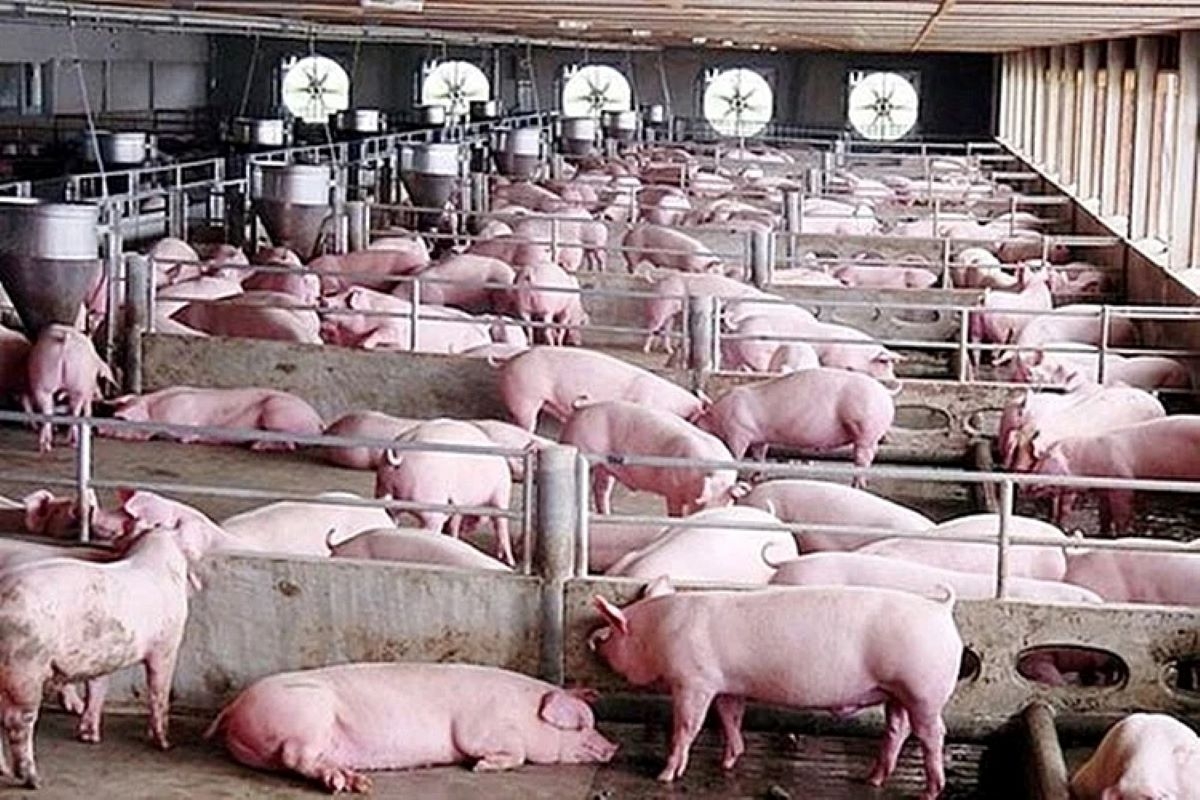
Over the past two weeks alone, live hog prices at farm gates have surged sharply, rising from around 68,000 VND per kilogram at the end of December 2025 to the current range of 72,000–75,000 VND per kilogram, with the northern region reaching a peak of 76,000 VND per kilogram. On January 17, 2026, the live hog market continued to show clear regional divergence. While northern prices paused after a rapid rally and held at the highest levels nationwide, prices in the Central Highlands, Central region and the South continued to climb, reflecting a gradual upward shift in the overall price benchmark.
Live hog prices remain elevated.
In the North, although prices have stabilized following a strong increase, they are still hovering at a peak of 74,000–76,000 VND per kilogram. Despite losing upward momentum, the region continues to post the highest prices in the country, indicating sustained strong purchasing demand. Lai Châu recorded the lowest price in the region at 74,000 VND per kilogram, while most other localities ranged between 75,000 and 76,000 VND per kilogram. According to experts, the 76,000 VND per kilogram level is acting as a short-term ceiling, pushing the market into a consolidation phase as it awaits new signals.
In contrast, prices in the Central region and the Central Highlands continued to rise. Specifically, hog prices in Quảng Trị, Đà Nẵng and Quảng Ngãi increased to 72,000 VND per kilogram. This movement is seen as a natural market response aimed at narrowing the price gap with the North. Across the region, live hog prices currently range from 70,000 to 74,000 VND per kilogram, with Thanh Hóa and Nghệ An leading at 74,000 VND per kilogram, while Lâm Đồng records the lowest level at 70,000 VND per kilogram.
In the South, the market recorded the strongest fluctuations on January 17, with many localities simultaneously posting increases of 1,000 VND per kilogram compared to January 16. Đồng Nai and Ho Chi Minh City reached 71,000 VND per kilogram, establishing the highest price level in the southern region. Other localities such as Đồng Tháp and Vĩnh Long recorded 70,000 VND per kilogram, while Cà Mau rose to 68,000 VND per kilogram. Although the South remains the lowest-priced region nationwide, it typically lags behind the North. Northern prices holding firm at 75,000–76,000 VND per kilogram are creating upward pressure, making it difficult for southern live hog prices to remain unchanged, especially in major slaughtering hubs and key livestock-producing areas.
Looking ahead, experts believe that in the short term, the North is likely to continue moving sideways at high price levels, while the South still has room for further increases in certain localities. The live hog market has entered a phase of tug-of-war and regional divergence ahead of the peak consumption season of the year, raising concerns that pork prices could climb even higher during the Lunar New Year.
Proactively ensuring food supply for the Lunar New Year
On January 17, 2026, Deputy Minister of Agriculture and Environment Phùng Đức Tiến led a working delegation to meet with livestock, processing and cold logistics enterprises to assess preparations for food supply and ensure market stability during the 2026 Lunar New Year (Bính Ngọ).
At a working session with San Hà Co., Ltd., company representatives said that in anticipation of a sharp rise in food consumption toward year-end, San Hà had proactively developed production and supply plans early on.
This year, the agricultural and food markets have been affected by a combination of factors, including economic fluctuations, rising input costs, and the impacts of weather and natural disasters in certain livestock-producing regions. Against this backdrop, San Hà adjusted its production plans with greater flexibility, preparing output at around 65% compared to previous years, while focusing on optimizing its value chain to stabilize supply and limit price volatility.
San Hà’s key advantage lies in its closed-loop value chain model, spanning livestock farming, slaughtering, processing and distribution. The company currently operates a system of farms, factories and livestock-linked networks across multiple localities, with production facilities certified under food safety standards such as Safe Food Chain, HACCP and ISO. This enables strict quality control, full traceability and effective servicing of both traditional and modern distribution channels.
During the Lunar New Year peak season, San Hà is stepping up deep processing, diversifying its product portfolio and efficiently utilizing domestic raw materials. Notably, the company has introduced small-sized whole chickens of around 1 kilogram, aligning with the cost-conscious and flexible consumption trends of many households. Its herbal free-range chicken line continues to maintain stable output, meeting growing demand for quality and food safety.
Speaking at the meeting, Deputy Minister Phùng Đức Tiến said consumption demand for meat, eggs and dairy products during the 2026 Lunar New Year is expected to rise by around 10–15%. The livestock sector is accelerating controlled restocking, applying science and technology, and strengthening value chain linkages to ensure safe supply, stabilize prices and effectively control animal diseases. He highly appreciated enterprises’ proactive role in organizing production, managing markets and ensuring food safety.
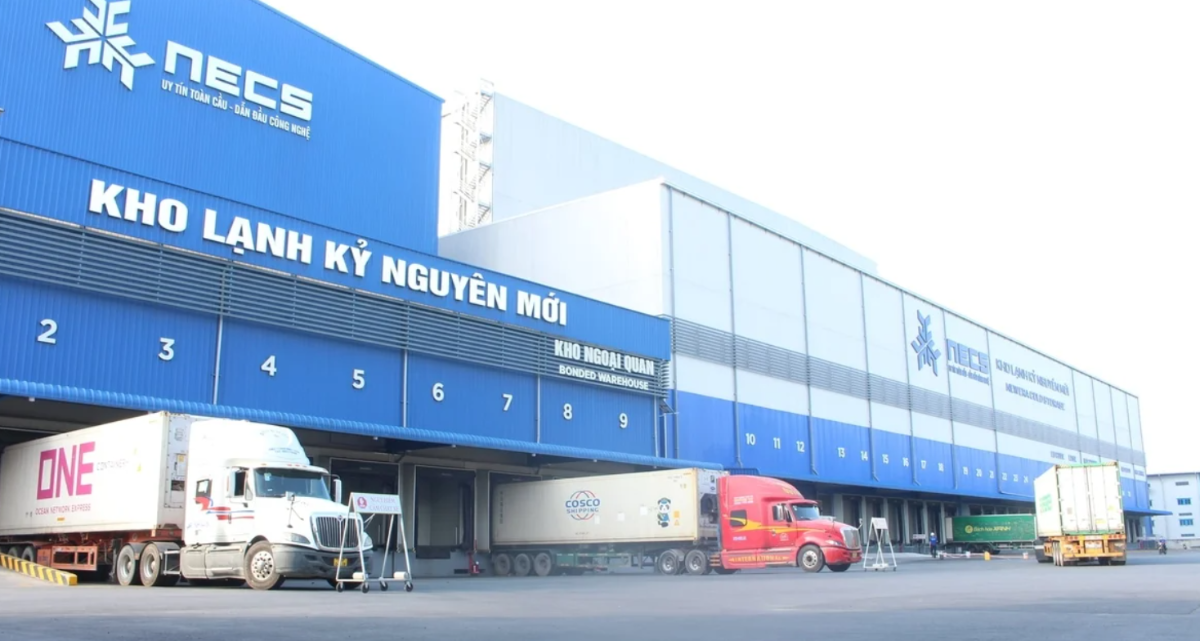
On the same day, the delegation also worked with New Era Cold Storage JSC (NECS), a next-generation cold logistics provider. NECS representatives said that following two investment phases, with the second phase completed in December 2025, the company’s total cold storage capacity has reached approximately 110,300 pallets, meeting the growing storage demand of the import-export market.
NECS cold storage facilities can store goods at temperatures ranging from minus 22 degrees Celsius to plus 25 degrees Celsius, suitable for a wide range of products. This is the first facility approved by the Customs Authority to operate as a digital bonded cold warehouse, meeting international standards such as ISO, Edge, MSC/ASC and the EU Code. The warehouse currently focuses on storing seafood, frozen fruits and certain food and pharmaceutical products.
A key highlight of NECS is its bonded warehouse model featuring comprehensive digitalization, with automated robotic systems for inbound and outbound operations running 24/7. This helps maintain stable temperatures, ensure product quality and enhance operational efficiency.
In his concluding remarks, Deputy Minister Phùng Đức Tiến emphasized that investment in deep processing, modern preservation and cold logistics is an inevitable direction to enhance added value, reduce losses and strengthen competitiveness. At the same time, digital transformation combined with green transition should be regarded as core pillars of sustainable agricultural development, with enterprises playing a central role in restructuring the value chain.
Source: vneconomy.vn

