


At a regular socio-economic press briefing held in Ho Chi Minh City on the afternoon of March 5, Nguyen Le Thien Thanh, Head of the International Economics Division under the Ho Chi Minh City Department of Industry and Trade, said escalating tensions in the Middle East are affecting import-export activities of many businesses in the city.
According to Thanh, the US market currently accounts for about 23% of Ho Chi Minh City’s total export turnover. Most goods exported to this market are transported via maritime routes passing through the Middle East before reaching the US East Coast.
Amid disruptions to several shipping routes, goods may require an additional 7–10 days in transit. This has significantly increased logistics costs for businesses.
According to the Ho Chi Minh City Export Processing and Industrial Zones Authority (Hepza), at least eight key manufacturing and export sectors in the city are being affected to varying degrees by developments in the Middle East.
Among them, the electronics and components sector is considered one of the most clearly impacted due to its heavy dependence on global supply chains. Some businesses have warned of potential shortages of chips and semiconductor components imported from Europe as shipping routes through the Red Sea face disruptions. If shipments are shifted to air freight, logistics costs rise sharply, pushing up product prices.
The textile and footwear industries are also facing the risk of delayed deliveries to European markets due to longer transportation times. Some enterprises have expressed concern that summer orders could be canceled if delivery schedules stipulated in contracts are not met.
For the chemicals and industrial materials sector, prices of many input materials such as plastic resins, solvents and additives are increasing in line with fluctuations in global oil prices. This has raised production costs, particularly for companies relying on imported chemical inputs.
In the seafood and food sectors, exporting companies, especially those shipping frozen shrimp and pangasius, are encountering difficulties as some air routes have been restricted or adjusted. Many cargo flights have been canceled or rerouted, pushing air freight rates higher while refrigerated containers have become scarce.
Some export shipments to Europe and Middle Eastern markets such as the UAE and Jordan are being held at transshipment ports longer than usual. This could lead to additional storage costs and increase the risk of cargo damage.
For the agricultural processing sector, businesses exporting to the Middle East and North Africa are facing challenges in international payments as operations at some regional banks have been disrupted. At the same time, rising logistics costs are eroding export profits.
Meanwhile, fluctuations in global oil prices are affecting the fuel and fertilizer sectors. Rising prices of fuel and petrochemical products are increasing production and transportation costs for many companies, while these materials are important inputs for numerous industries.
For the wood processing and furniture sector, Thanh said the current impact remains limited. However, businesses in the industry expect clearer effects in the medium and long term if logistics costs continue to rise or consumer demand in export markets declines.
The logistics and transport sector is considered the most heavily affected. According to Hepza, many shipping lines have canceled sailings or adjusted routes, diverting vessels around the Cape of Good Hope in South Africa. This change in shipping routes has extended transportation time by around three to four weeks.
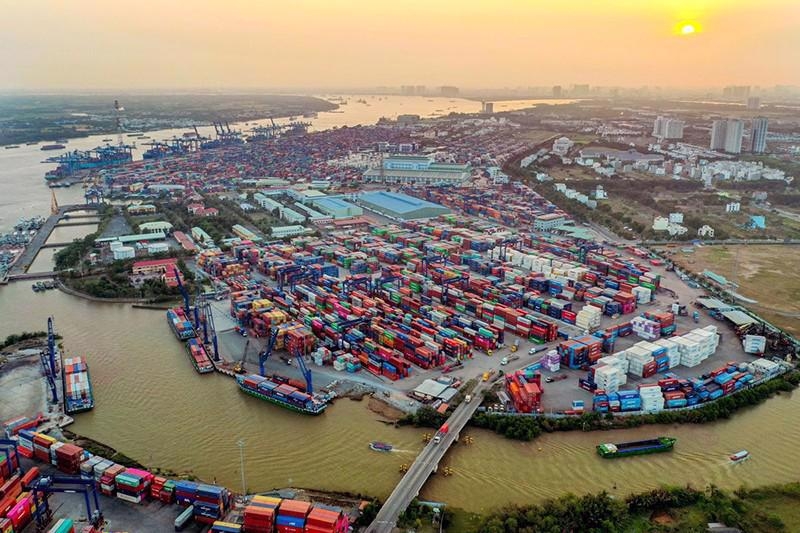
The adjustments have pushed up freight costs and generated additional surcharges such as war risk premiums and route diversion fees. In addition, longer sailing distances have extended container turnaround cycles, leading to a shortage of empty containers at ports in Ho Chi Minh City.
In response to the complicated developments in the Middle East, representatives from the Department of Industry and Trade and Hepza said they are closely monitoring business operations, especially those dependent on raw materials or markets in the region.
Authorities are also coordinating with relevant departments to implement recommendations from the Ministry of Industry and Trade, while supporting businesses through administrative procedures related to import and export, certificates of origin and other trade procedures.
Amid ongoing geopolitical risks, exporting enterprises are advised to proactively diversify shipping routes, raw material sources and export markets in order to reduce dependence on volatile regions.
Thanh added that the department will propose that the municipal People’s Committee reassess the impact of the conflict on economic activities and consider support measures on taxes and interest rates for import-export businesses in the city.
Source: vneconomy.vn

