


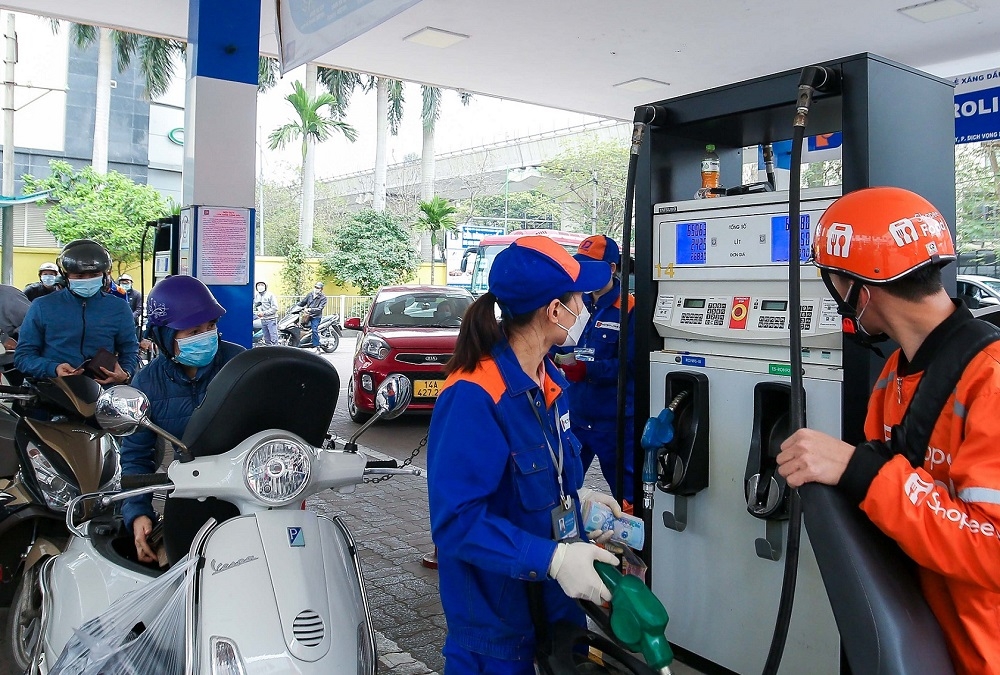
Amid geopolitical volatility in the Middle East pushing global energy risks higher, many energy-importing economies—particularly in Asia, including Vietnam—are facing the threat of supply shortages and energy price fluctuations.
Directive No. 06 aims to proactively respond to changes in the international energy market, ensure sufficient petroleum supply for business production and consumer demand, and contribute to controlling inflation, stabilizing the macroeconomy and safeguarding national energy security.
LOCAL AUTHORITIES PROACTIVELY DEVELOP SUPPLY SCENARIOS, STRENGTHEN MARKET SUPERVISION
For provinces and cities, the Ministry of Industry and Trade requires local governments to proactively coordinate with businesses to develop plans ensuring petroleum supply under all circumstances.
Localities are asked to create favorable conditions for petroleum trading enterprises in sourcing, transportation and distribution. At the same time, they must strengthen inspection and supervision of petroleum trading activities in order to detect and strictly handle acts such as speculation, hoarding, cross-border fuel smuggling or violations of petroleum business regulations.
One key requirement is to prevent petroleum retail outlets from arbitrarily suspending sales without legitimate reasons, which could cause localized supply shortages.
In addition, local media agencies are required to enhance the timely and accurate dissemination of information about petroleum supply conditions as well as the Government’s regulatory measures in order to stabilize market sentiment.
Provincial and municipal Departments of Industry and Trade are tasked with closely monitoring petroleum supply and demand developments in their localities and supervising the business activities of traders.
Regulatory authorities must strictly check compliance with regulations on petroleum quality, retail prices, operating hours and other business conditions of the retail station system.
Local market surveillance forces are also required to strengthen inspections of petroleum stations to ensure continued sales operations and to examine measurement accuracy, product quality and retail prices in the market.
Any unusual fluctuations in the petroleum market must be promptly reported to the Ministry of Industry and Trade to support regulatory management.
ENERGY GROUPS BOOST PRODUCTION AND STOCKPILING
For major energy groups, the Ministry of Industry and Trade requires proactive measures to ensure fuel supply for the economy.
The Vietnam National Industry – Energy Group is required to maintain stable operations at oil and gas extraction and processing facilities, particularly oil refineries. The group is also expected to apply technological and management solutions to increase production capacity within technical limits in order to boost domestic petroleum supply.
At the same time, the group must closely monitor developments in the crude oil market and proactively develop response scenarios for fluctuations in global energy supply.
Vietnam Electricity is tasked with coordinating with units operating the national power system to develop operating plans that ensure stable electricity supply for the economy. It must also work closely with fuel suppliers to guarantee adequate supplies of coal, gas and other fuels for power plants.
For the Vietnam National Coal – Mineral Industries Group and Dong Bac Corporation, the Ministry of Industry and Trade requires proactive plans for coal extraction and supply in line with the economy’s demand.
These units are expected to strengthen reserves and regulate coal supply to ensure sufficient fuel for power plants while closely monitoring developments in the international coal market to prepare import and stockpiling plans when necessary.
BALANCING INTERESTS OF THE STATE, BUSINESSES AND CONSUMERS
A key element of the directive is the requirement for petroleum wholesalers to strictly implement the petroleum supply plans assigned for 2026.
Wholesale enterprises must proactively forecast market developments, develop response plans for supply fluctuations and diversify import sources. At the same time, they must fully comply with mandatory petroleum reserve obligations to ensure adequate fuel supply to the market under all circumstances.
The Ministry of Industry and Trade emphasizes that wholesalers must not hoard supplies in anticipation of price increases or allow supply disruptions within the distribution system.
Enterprises must ensure sufficient petroleum supply to retail station networks and maintain continuous sales operations, even if it requires increasing manpower or organizing additional shifts.
In addition to ensuring supply, wholesale enterprises are also required to provide complete and timely data to management authorities to support cost calculations in the petroleum base price formula. This is intended to ensure that fuel price management is conducted accurately and transparently, helping stabilize the market and balance the interests of the state, businesses and consumers.
Source: vneconomy.vn

